
They can because they believe they can,”
Vigil
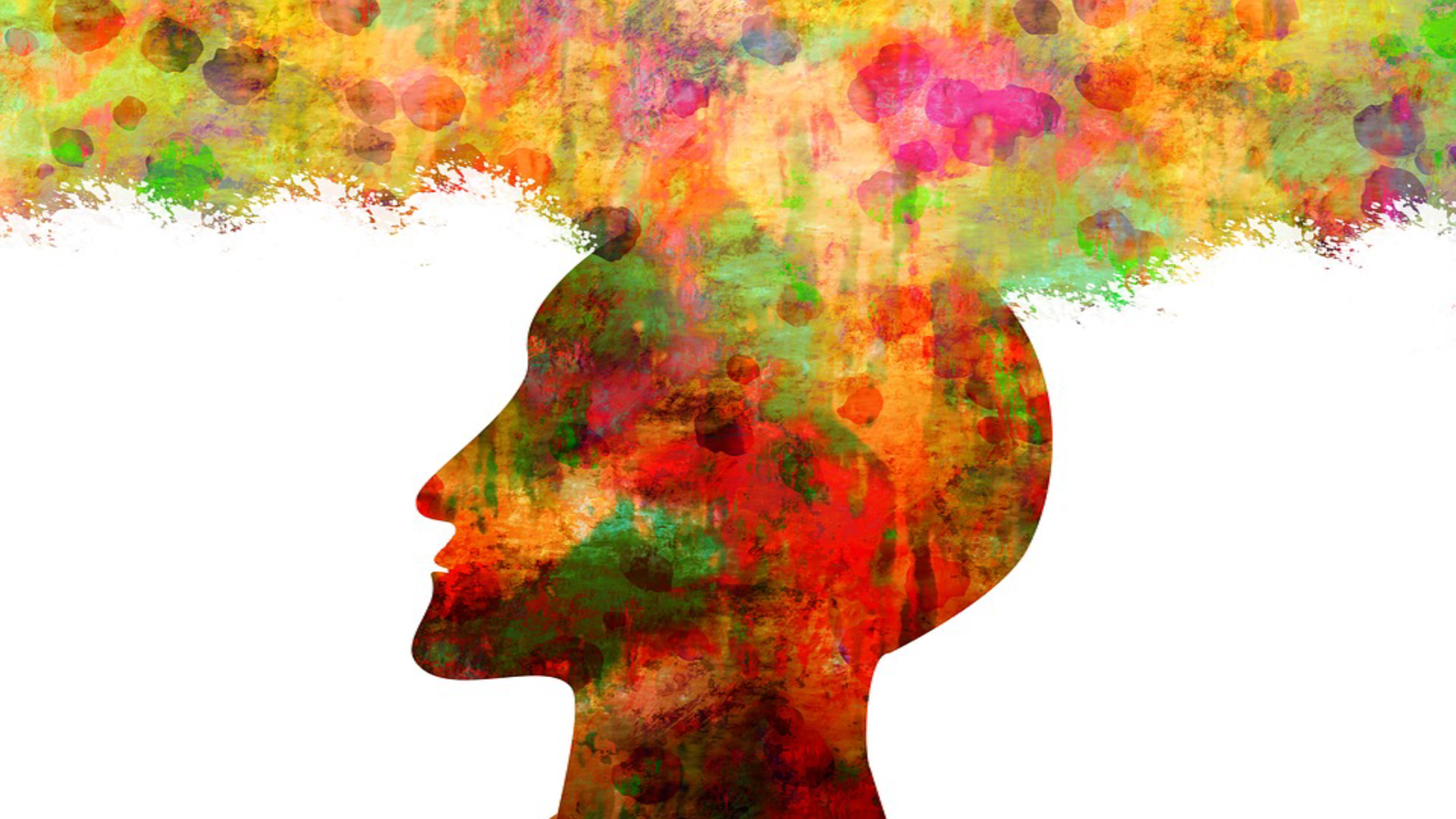
It is not surprising that hypnotherapy has at times been called ‘imagination therapy’ given the major role our imagination plays in the positive outcomes mediated through a hypnotic experience.
Imagination is the ability to form mental images, analogies, or narratives of something that is not perceived through our senses. Imagination is a manifestation of our memory and enables us to scrutinise our past and construct hypothetical future scenarios that do not yet, but could exist. Imagination also gives us the ability to see things from other points of view and empathise with others.
Mental images are the pictures you see in your mind. Nearly everyone experiences some type of images. These images can also include any of the five senses. For example, you can “hear” sounds in your imagination. You might also smell, taste, or feel things in your imagination. Images may be clear or unclear, fleeting or long-lasting. When I refer to “mental images”, this is what I’m referring to.
Under hypnosis imagination can seem to take on the quality of a hallucination.
David Spiegel, Psychiatrist
Imagination extends our experience and thoughts, enabling a personal construction of a world view that lowers our sense of uncertainty. In this way our imagination fills in the gaps within our knowledge enabling us to create mental maps that make meaning out of the ambiguities of situations we face where information is lacking, which is an important function of our memory management.
This partly explains why people react differently to what they see due to the unique interpretations they make based on different prior knowledge and experience. Imagination enables us to create new meanings from cognitive cues or stimuli within the environment, which on occasions can lead to new insights.
“Our knowledge and personal goals are embedded within our imagination which is at the heart of our existence, a cognitive quality that we would not be human without.”
Dr. Jan Sammut
Imagination is not a totally conscious process. New knowledge may incubate unconsciously when a person has surplus attention to focus on recombining memory and external stimuli into new meanings.
Unguided imagination (or what was once termed “free association”) through dreaming and “daydreaming” enables the gathering of information from different parts of our memory, which may not be easy to access consciously. This information may come from within a narrow domain or a much wider field.
The more imagination takes account of the wider field, experience, and prior knowledge, the more likely these ideas created through imagination will have some originality – through complex knowledge restructuring.
“The true sign of intelligence is not knowledge but imagination.”
Albert Einstein
Most cases of insight are inspired by something in the past; although through imagery these new concepts are given new types of manifestations. It is through the imagery of analogies that many breakthroughs in science have been achieved. Einstein developed his insight for the theory of relativity through imagining what would happen if he travelled at the speed of light, and Faraday claimed to have visualized force lines from electric and magnetic fields from a wood fire giving insight into the theory of electromagnetic fields.
“I never made one of my discoveries through the process of rational thinking. Logic will get you from A to B. Imagination will take you everywhere.”
Albert Einstein
Forms of Imagination
Psychologists and thinkers have identified different ways imagination operates in our lives. These modes often overlap, but each shows how imagination can either help or hinder our growth.
Effectuative Imagination
Combines information together to synergise new concepts and ideas. However these are often incomplete and need to be enhanced, modified, and/or elaborated upon as more information from the environment comes to attention and is reflected upon. Effectuative imagination can be either guided or triggered by random thoughts, usually stimulated by what a person experiences within the framework of their past experience.
Effectuative imagination may also incubate from pondering over a specific problem within the occasional attention of a person. Effectuative imagination is extremely flexible and allows for continuous change. This is an important ingredient in entrepreneurial planning, strategy crafting, particularly in opportunity construction, development, and assembling all the necessary resources required to exploit any opportunity.
Effectuative imagination also leads to other forms of imagination that assists in the construction of concepts, ideas, and action scenarios. Effectuative imagination enables flexibility in our thinking.
Intellectual (or constructive) Imagination
Is utilised when considering and developing hypotheses from different pieces of information or pondering over various issues of meaning say in the areas of philosophy, management, or politics, etc. Intellectual imagination originates from a definite idea or plan and thus is guided imagination as it has a distinct purpose which in the end must be articulated after a period of painstaking and sometimes meticulous endeavour.
This can be very well illustrated with Charles Darwin’s work which resulted in the development of his hypothesis explained in his book The Origin of Species which took almost two decades to gestate and complete. Darwin collected information, analysed it, evaluated and criticised the findings, and then reorganized all the information into new knowledge in the form of a hypothesis. Intellectual imagination is a very conscious process, although it may slip into other forms of imagination that enable new insights.
Imaginal Absorption (Imaginative fantasy)
Creates and develops stories, pictures, poems, stage-plays, and the building of the esoteric, etc. This form of imagination may be based upon the inspiration of some fact or semi-autobiographical experiences. Imaginative fantasy can be a mixture of guided and unguided imagination and is important to artists, writers, dancers, and musicians, etc.
It is also very important in hypnosis because people who become easily engrossed in movies, novels or daydreams tend to be better hypnotic subjects. People who are able to become absorbed in their imagination are able to focus more deeply on the images evoked by hypnotic suggestions.
“When the imagination and will power are in conflict, are antagonistic, it is always the imagination which wins, without any exception. If you imagine yourself drowning, no amount of paddling and flapping will keep your mouth above water, and any knowledge or mastery of the act of swimming becomes at that point, irrelevant”.
Émile Coué – The Law of Reversed Effort
Empathy
Is a capacity we have to connect to others and feel what they are feeling. Empathy helps a person know emotionally what others are experiencing from their frame of reference. Empathy allows our mind ‘to detach itself from one’s self’ and see the world from someone else’s feelings, emotions, pain, and reasoning.
Empathy can assist us in seeing other realities, alternative meanings of situations, which may consist of many layers. Empathy shows us that there are no absolutes, just alternative meanings to situations. Empathy links us to the larger community and is thus important to human survival in enabling us to understand what is required to socially coexist with others.
Strategic Imagination
Is concerned about vision of ‘what could be’, the ability to recognise and evaluate opportunities by turning them into mental scenarios, seeing the benefits, identifying the types and quantities of resources required for taking particular actions, and the ability to weigh up all the issues in a strategic manner. A vision helps a person focus upon the types of opportunities suited to their disposition.
This sense of vision is guided by a person’s assumptions, beliefs and values within the psych. Vision has varying strengths in different people depending upon their ego characteristics and motivations. The ability to spot and evaluate opportunities is closely linked with a person’s imagination, creative thinking, propensity to action, and perceptions of their talents and available skills.
Adequate concentration is required in order to have a strategic outlook upon things. This requires focus in strategic thinking, creativity, a sense of vision, and empathy. Strategic (and also intellectual) imagination can be utilised through thought experiments, the process of thinking through a scenario for the purpose of thinking through the consequences.
Too little focus will result in random jumping from potential opportunity to opportunity without undertaking any diligent mental evaluations. Too much focus may result in narrow mindedness and even obsessive thinking which would result in either blindness to potential opportunities or at the other end of the scale taking action without truly “objective” evaluation. Strategic imagination in some cases is a form of wisdom.
Emotional Imagination
Is concerned with manifesting emotional dispositions and extending them into emotional scenarios. Without any imagination, emotion would not be able to emerge from our psych and manifest as feelings, moods, and dispositions.
Fear requires the imagination of what is fearful, hate requires imagination about what is repulsive, and worry requires the imaginative generation of scenarios that make one anxious.
Through emotional imagination, beliefs are developed through giving weight to imaginative scenarios that generate further sets of higher order emotions. Emotional imagination operates at the unconscious and semi-unconscious level.
People who show excessive emotional imagination would most probably be defined as exhibiting psychotic tendencies. Emotional imagination is one of the most powerful types of our imagination and can easily dominate our thinking processes.
“I am an old man and have known many troubles, but most of them never happened. “
Mark Twain
Dreams
Are an unconscious form of imagination made up of images, ideas, emotions, and sensations that occur during certain stages of sleep. Dreams show that every concept in our mind has its own psychic associations and that ideas we deal with in everyday life are by no means as precise as we think. Our experiences become sublimed into our memory passing into the unconscious where the factual characteristics can change, and can be reacquired at any time.
According to Jung, dreams are the invisible roots of our consciousness, and connect us to our unconscious. However the meaning of dreams can only be based on our speculative interpretation. Some dreams are very straight forward, while others surreal, magical, melancholic, adventurous, and sexual where we are most of the time not in control.
Memory Reconstruction
Is the process of retrieving our memory of people, objects, and events. Our memory is made up of prior knowledge consisting of a mix of truth and belief, influenced by emotion. Recurring memory therefore carries attitudes, values, and identity as most of our memory is within the “I” or “me” paradigm.
Memory is also reconstructed to fit into our current view of the world, so is very selective. The process of memory reconstruction happens automatically and then emerges into our consciousness without us being really aware of the source elements, i.e., what is fact and what is belief.
So you can see how easy it is for this process to create false memories that aren’t entirely based on facts, but the same process can also be used to modify painful memories, such as in the treatment of trauma for example.
It is a very powerful and useful process since memory reconstruction is assimilative and can therefore construct new knowledge out of random facts, beliefs and experiences which may lead to insight. But because all memory is reconstructed memory we must always keep in mind that our memories are not as accurate as we may think they are.
We only store bits and pieces of information from an experience even in the best observation conditions, and because the brain abhors a vacuum, the void and missing information will be filled in by our brains from inference, speculation and information derived from other experiences. All this happens outside our awareness.
Memories are dynamic reconstructions rather than fixed records. They are the products of what we originally experienced and everything that happened afterwards.
Dr. Jan Sammut
Each form of imagination outlined above certainly overlaps and may operate in tandem. Imaginative thinking provides the ability to move towards objectives, and travel along selected paths.
Imaginative thought is much more divergent than logical thought, as imagination can move freely across fields and disciplines, while logical thinking is orientated along a narrowly focused path. From this perspective imagination is probably more important than knowledge as knowledge without application is useless.
“Imagination enables us to apply knowledge in ways that can help us remodel patterns of unhelpful thinking and maladaptive behaviour and by so doing the painful feelings and emotions which they provoke will also change.”
Dr. Jan Sammut
However imagination can also be dysfunctional. Distressing emotional experiences, trauma and excessive stress can dominate our imagination with fear, sadness, anxiety, paranoia, and/or narcissistic tendencies, etc. This may prevent a person from imagining new alternatives to their current goals and behaviour, thus allowing their past fears, loss and anxieties to dominate their thinking.
Imagination can consciously or unconsciously dissociate a person from the reality of their everyday life where they may fall into the life of fantasy. Abstract imagination can very quickly take a person away from reality where current problems are ignored in favor of fantasy.
Most Human Beings are not suffering life, they are just suffering their memory and their imagination. What happened 10 years ago they still suffer, and what may happen the day after tomorrow they already suffer. This is not about life, this is about lack of control over two most fantastic faculties that human beings have – a vivid sense of memory and a fantastic sense of imagination.
Cognitive Behavioural Hypnotherapy relies on the integration of the human ability to create vivid mental images with scientifically proven cognitive and behavioural strategies in order to mobilise internal resources so that positive change becomes possible. It recruits the imagination in the service of physical and mental wellbeing, rather than allowing it to cause and perpetuate chronic psychological and behavioural suffering.
 Hypnotic Alliance