
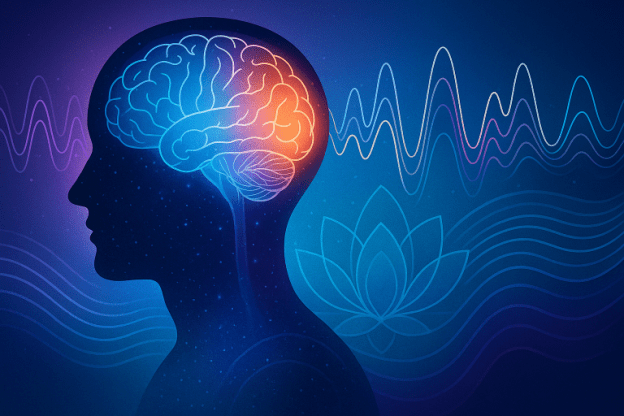
In the landscape of psychotherapy, our ultimate goal is to empower clients with tools that foster emotional resilience, cognitive flexibility, and behavioural change. Established techniques like progressive muscle relaxation, mindfulness practice, cognitive diffusion, and emotion regulation skills are pillars of evidence-based therapy. However, a common and significant challenge remains: the difficulty clients face in lowering the “volume” of their emotional states in between sessions.
When emotional activation is too high — when anxiety, anger, fear, or sadness are overwhelming — it becomes extremely difficult for clients to apply cognitive or behavioural strategies learned in therapy.
This is where simple, neurologically grounded tools can make a meaningful difference. One such tool, which remains surprisingly underused in traditional clinical settings, is binaural beats.
What Are Binaural Beats?
Binaural beats are a natural auditory phenomenon where the brain, when presented with two slightly different sound frequencies in each ear, perceives a rhythmic beat — a “third” sound internally generated by the brain itself.
Research has shown that with sustained listening, the brain’s electrical activity can synchronise to the frequency of the beat, a process known as brainwave entrainment.
Different frequencies are associated with different mental states:
- Theta waves (4–8 Hz) — linked to deep relaxation and emotional processing
- Alpha waves (8–12 Hz) — associated with calm focus and stress reduction
- Low-beta waves (12–15 Hz) — supportive of active focus and cognitive performance
Unlike speculative or pseudoscientific claims that often surround “energy healing,” the mechanisms underlying binaural beats are well-understood through basic auditory neuroscience and studies on neural entrainment.
Why Should Therapists Pay Attention?
Tools like progressive muscle relaxation or mindfulness are extremely powerful, but they require weeks or months of practice before clients experience consistent benefits.
Binaural beats, on the other hand, can offer a relatively immediate calming effect after just 10–20 minutes of listening — especially when used thoughtfully and in a guided framework.
When emotional arousal is lowered quickly and naturally, clients:
- Have greater access to executive function (planning, regulating, problem-solving)
- Are better able to engage with therapeutic exercises between sessions
- Feel empowered by having a tangible, immediate tool they can use independently
Importantly: binaural beats should never be seen as a replacement for core therapeutic work. Rather, they should be offered as a complementary option to support nervous system regulation — creating a more fertile ground for the cognitive and behavioral change processes we aim to cultivate.
A Responsible Way to Introduce Binaural Beats to Clients
Therapists considering adding binaural beats to their practice can do so ethically and responsibly by:
- Framing binaural beats as a relaxation aid, not a stand-alone therapy.
- Explaining the simple neurobiological principles behind brainwave entrainment.
- Offering vetted listening tracks targeting specific brainwave ranges (theta for deep relaxation, alpha for calm focus).
- Encouraging use in a structured way: for example, 20 minutes of theta beats before practicing therapeutic homework.
- Reinforcing that consistent use, alongside therapy, builds deeper emotional regulation capacity over time.
To assist with safe and effective use, I have created a free downloadable guide:
Download the Guide to Deepening Brainwave Entrainment
Research Supporting Binaural Beats for Relaxation and Focus
Several studies support the use of binaural beats as a complementary tool for emotional regulation and cognitive enhancement:
- Wahbeh, H., Calabrese, C., & Zwickey, H. (2007).
Binaural beat technology in humans: a pilot study to assess psychological and physiological effects.
Found that theta-frequency binaural beats reduced anxiety and increased parasympathetic activity.
- Garcia-Argibay, M., Santed, M. Á., & Reales, J. M. (2019).
Efficacy of binaural auditory beats in cognition, anxiety, and pain perception: A meta-analysis.
Meta-analysis showing small but significant positive effects on anxiety reduction and cognitive tasks.
- Lane, J. D., Kasian, S. J., Owens, J. E., & Marsh, G. R. (1998).
Binaural auditory beats affect vigilance performance and mood.
Found that beta-frequency binaural beats improved alertness and performance on attention tasks.
Final Thoughts
In an era where therapy must increasingly meet clients where they are — often stressed, overwhelmed, and seeking immediate relief — it is essential that we remain open to integrating simple, science-based tools that complement our core modalities.
Binaural beats are one such tool: easy to use, safe, grounded in neuroscience, and offering real support for clients struggling to calm their nervous systems between sessions.
By embracing and exploring such options, we honor both the scientific foundations of our field and the evolving needs of the people we serve.
(Warning: If you have a history of epilepsy, sound sensitivity, or neurological conditions please consult with a healthcare provider before adding any new wellness tools.)
Discover more from Hypnotic Alliance
Subscribe to get the latest posts sent to your email.
 Hypnotic Alliance